
Carry On Bag Size Chart
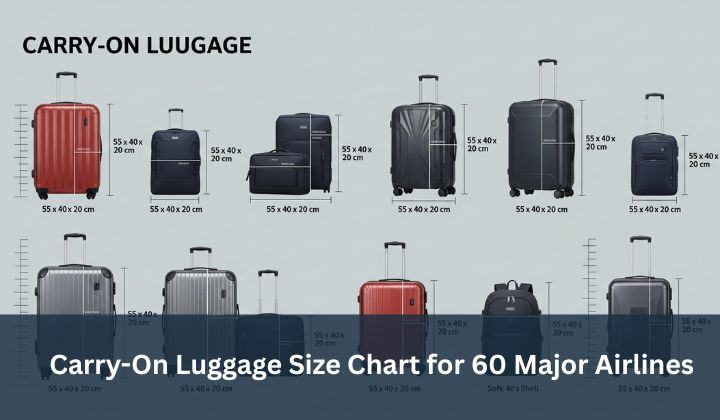
Have you ever found yourself standing in front of an airport check-in counter, wondering if your carry-on bag is going to fit in the overhead compartment? It's a pretty common dilemma, and one that can be easily avoided with a little knowledge of carry-on bag size charts. But, have you ever stopped to think about why these charts are even necessary in the first place?
Well, it's pretty simple really - different airlines have different rules when it comes to carry-on bag sizes, and it's not always easy to keep track of what's allowed and what's not. Imagine showing up to the airport with a bag that's just a little too big, only to be told that you have to check it and pay an extra fee. Not exactly the most relaxing way to start a trip, right?
Why Size Matters
So, why do airlines care so much about the size of our carry-on bags? It all comes down to safety and convenience. You see, when bags are too big, they can be a real hazard in the cabin, getting in the way of passengers and crew members alike. And, let's be real, who wants to be stuck in a cramped airplane seat with a giant bag taking up all the overhead space?
Must Read
But, it's not all about the airlines - carry-on bag size charts can also be a lifesaver for passengers. By knowing exactly what size bag is allowed, we can plan ahead and pack accordingly, avoiding any last-minute stress or hassle at the airport. And, let's not forget about the environmental benefits - the less we check, the less fuel is needed to fly our bags around, right?
The Lowdown on Sizes
So, what are the magic numbers when it comes to carry-on bag sizes? Well, it varies from airline to airline, but most seem to agree on a few basic dimensions - 22 inches tall, 14 inches wide, and 9 inches deep is a pretty common size limit. But, don't worry if that sounds like a bunch of gibberish - there are plenty of resources out there to help you figure it all out.
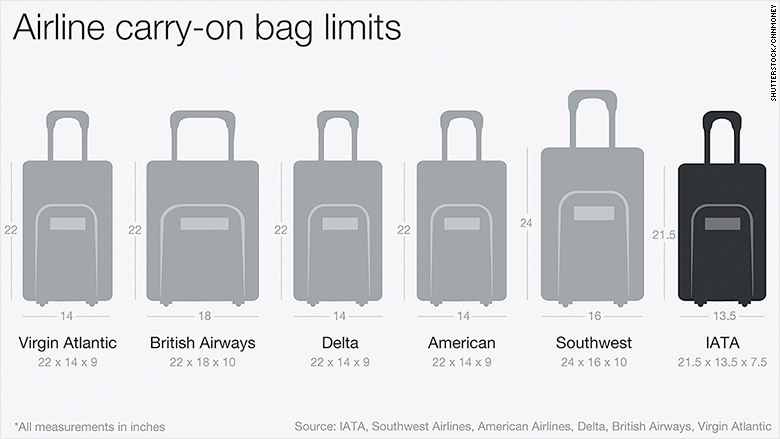
For example, you can check out the airline's website, or look for a carry-on bag size chart online. These charts are usually super helpful, giving you a visual guide to what's allowed and what's not. And, if you're still unsure, you can always measure your bag at home, just to be sure - it's always better to be safe than sorry, right?
Comparing the Competition
But, how do different airlines compare when it comes to carry-on bag sizes? Well, it's a bit of a mixed bag, to be honest. Some airlines, like Spirit and Frontier, have pretty strict size limits, while others, like United and Delta, are a bit more relaxed. And then there are the international airlines, which often have their own unique size limits and regulations to contend with.

For instance, European airlines tend to have smaller size limits than their American counterparts, while Asian airlines often have more generous allowances. It's all a bit confusing, but with a little research and planning, you can avoid any headaches and make sure your carry-on bag is always good to go.
And, as a fun little exercise, you can even compare the size of your carry-on bag to everyday objects - is it bigger than a breadbox, or smaller than a suitcase? It's a fun way to visualize the size limits, and can even help you pack more efficiently. So, next time you're heading out on a trip, be sure to check the size chart and avoid any last-minute surprises at the airport.
In conclusion, carry-on bag size charts might seem like a bit of a nuisance, but they're actually a pretty useful tool for both airlines and passengers. By knowing what to expect, we can all breathe a little easier and enjoy our travels without any added stress. Happy travels, and don't forget to measure that bag!